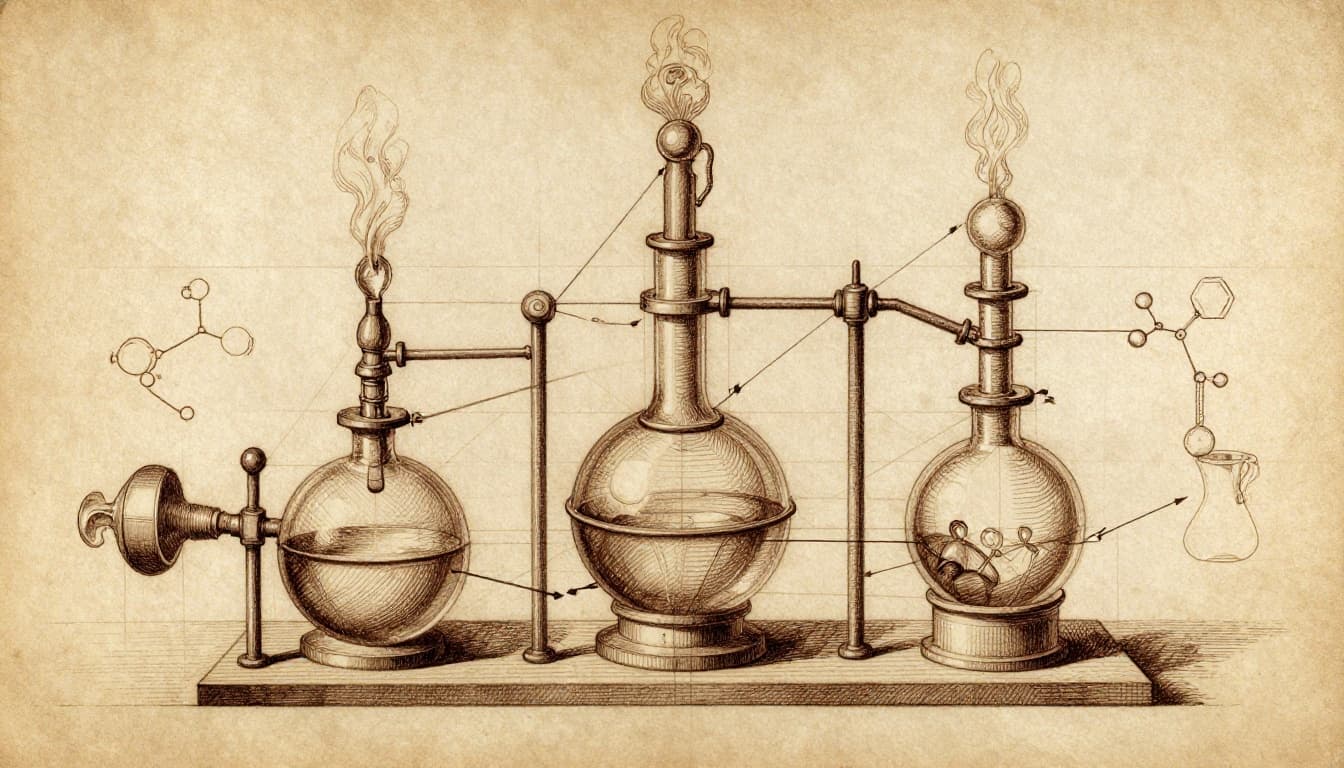
Largest chemical reactions database launched to boost AI drug discovery
June 26, 2026 • Source: Drug Target Review
Researchers at the University of Michigan have launched the largest open-access repository of carbon-nitrogen bond-forming reactions, a critical resource poised to advance AI-assisted drug discovery. This initiative addresses significant data gaps in pharmaceutical synthesis, promising more efficient drug production and reduced dependence on precious metal catalysts.
**Key Facts:** • University of Michigan launched the largest open-access repository of carbon-nitrogen bond-forming reactions. • Database designed to address critical data gaps in AI-assisted drug discovery. • Aims to reshape pharmaceutical synthesis, leading to more efficient drug production. • Expected to reduce reliance on costly precious metal catalysts. • Already yielding unexpected chemical insights, accelerating discovery. • Open-access nature benefits a wide range of research and industry sectors.
The University of Michigan has introduced a foundational dataset for AI in chemistry, launching the largest open-access repository of carbon-nitrogen bond-forming reactions. This strategic move aims to bridge existing data shortfalls that have hindered advanced AI applications in pharmaceutical synthesis, signaling a shift toward data-driven innovation in drug development.
Catalyzing AI in Chemical Synthesis: The Michigan Initiative
The newly launched database by University of Michigan researchers represents the most extensive open-access collection of carbon-nitrogen bond-forming reactions. This repository is specifically designed to provide high-quality, structured data essential for training and validating artificial intelligence models, which are increasingly central to modern drug discovery and development processes.
A primary objective of this initiative is to mitigate critical data gaps that have historically limited the efficacy of AI tools in predicting and optimizing chemical syntheses. By making this comprehensive dataset openly available, the University of Michigan aims to democratize access to vital information, enabling a broader spectrum of researchers and institutions to leverage AI for complex synthetic challenges.
Initial applications of the database have already yielded unexpected chemical insights, demonstrating its immediate utility in identifying novel synthetic pathways. These discoveries hold potential for optimizing reaction conditions and exploring previously unconsidered routes for molecule construction, thereby accelerating the identification and development of drug candidates.
Operational and Economic Efficiencies in Pharmaceutical Production
The insights derived from this extensive reaction database are anticipated to translate into more efficient drug production processes. For pharmaceutical and biotechnology enterprises, this signifies the potential for streamlined synthetic routes, reduced raw material consumption, and higher reaction yields, directly impacting operational costs and accelerating the journey from laboratory synthesis to manufacturing scale.
A significant economic implication lies in the potential for reduced reliance on precious metal catalysts, such as palladium and platinum, which are often costly and subject to supply chain volatility. AI models trained on this database can identify alternative, more abundant, and environmentally benign catalytic systems or even catalyst-free pathways, thereby enhancing the sustainability and cost-effectiveness of drug manufacturing.
The ability to rapidly identify optimal synthetic routes and minimize resource intensity offers a substantial competitive advantage. Enterprise buyers across biomanufacturing and pharmaceutical development can expect to benefit from faster process development cycles, lower capital expenditure on specialized catalysts, and a more robust, resilient supply chain for active pharmaceutical ingredients (APIs).
Cross-Sectoral Impact on Biological and Chemical Sciences
The availability of this open-access resource has far-reaching implications across the life sciences. For Pharmaceutical & Drug Development companies and Biotechnology Startups, it offers an unprecedented tool for accelerating lead optimization, designing novel molecular scaffolds, and streamlining retrosynthetic analysis. Academic Research & Universities gain a rich dataset for advanced studies, algorithm development, and training the next generation of computational chemists.
Clinical Research Organizations (CROs) and Contract Development and Manufacturing Organizations (CDMOs) can leverage this database to enhance their service offerings, providing clients with optimized synthetic routes, faster turnaround times, and potentially lower costs for API production. This improves their competitive position by integrating cutting-edge AI-driven methodologies into their operational frameworks.
Beyond direct drug discovery, the principles of efficient carbon-nitrogen bond formation and catalyst innovation extend to Agricultural & Food Science for developing novel agrochemicals, and Environmental & Conservation efforts for synthesizing new materials or remediation agents. Government & National Labs also benefit from open science initiatives that foster collaborative research and accelerate breakthroughs across multiple scientific disciplines, ultimately impacting public health and economic growth.
Published June 26, 2026
More NewsLast updated: June 27, 2026